You’re counting days on the calendar, noticing small changes in your body, and wondering whether it’s too early to feel anything yet.
Many women come to us with this simple question: Do pregnancy symptoms start before or after a missed period? But the answer isn’t always straightforward. Early pregnancy looks different for everyone, and symptoms can begin as soon as one to two weeks after conception.
This guide explains when pregnancy symptoms typically start, which signs often show up first, and when it’s time to take a pregnancy test or talk with a provider. If you think you might be pregnant, scheduling a consultation at WomanCare early can help you get the clarity and support you need from the start.
When Do the First Signs of Pregnancy Begin?
For many women, early pregnancy symptoms begin around implantation, which occurs about 6 to 12 days after ovulation. This is when a fertilized egg attaches to the uterine lining and hormone levels start to rise.
Some women notice changes almost immediately, while others don’t feel any symptoms until after a missed period.
Timing depends on factors such as hormone levels, health history, and your body’s sensitivity level to hormonal shifts. Early pregnancy hormones, especially human chorionic gonadotropin (hCG) and progesterone, drive many of these first pregnancy signs.
What Are the Earliest Pregnancy Symptoms?
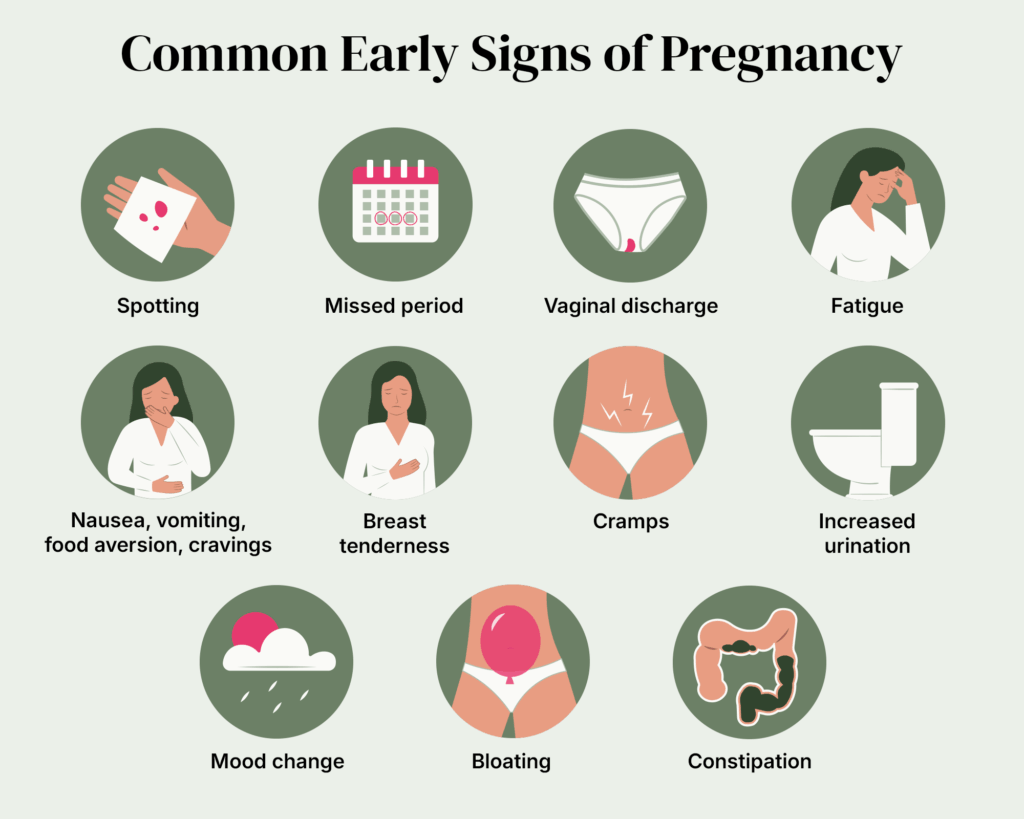
Early pregnancy changes are often subtle and easy to confuse with premenstrual syndrome (PMS). Paying attention to timing and patterns can help.
Implantation Symptoms (6–12 Days After Ovulation)
Some women experience mild symptoms around implantation, including:
- Light spotting or pink- or brown-tinged discharge
- Mild cramping similar to period discomfort
- Breast tenderness or increased sensitivity
These symptoms are usually brief and may not be experienced by everyone.
Symptoms Around a Missed Period (Weeks 4–5)
As hormone levels continue to rise, symptoms often become more noticeable. Some of the most common signs and symptoms include:
- Fatigue or feeling unusually tired
- Nausea or mild queasiness
- Breast fullness or soreness
- Frequent urination
- Mood swings or emotional sensitivity
- Heightened sensitivity to smells or new food aversions
This is often the point when many women decide to take a home pregnancy test.
Early Hormonal Symptoms (Weeks 3–6)
Rising hCG and progesterone during these weeks can cause:
- Nausea with or without vomiting
- Bloating or digestive changes
- Increased sleepiness
Of course, hormone levels vary from person to person. While some people experience intense symptoms early on, others may feel very little, and both responses are normal.
Why Do Pregnancy Symptoms Start at Different Times?
There’s no universal timeline for pregnancy symptoms. Genetics, hormone levels, stress, sleep, prior pregnancies, and overall health all play a role in how and when symptoms appear.
Having few or no symptoms doesn’t mean something is wrong, just as having early symptoms doesn’t predict how your pregnancy will progress.
Early Pregnancy vs. PMS: How to Tell the Difference
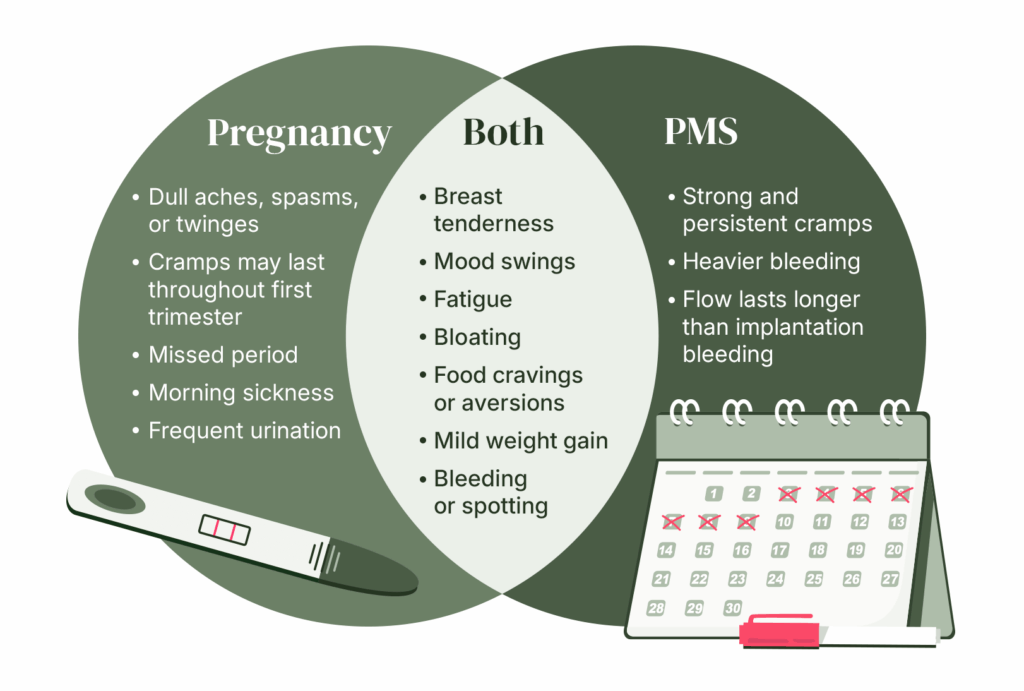
Pregnancy symptoms and PMS often overlap. Both can cause:
- Breast tenderness
- Mood changes
- Bloating
- Fatigue
The main difference is that pregnancy symptoms may feel more persistent or progress rather than resolve. However, the only way to know for sure is with a pregnancy test or bloodwork.
When Should You Take a Pregnancy Test?
At-home pregnancy tests are most accurate after a missed period, when hCG levels are high enough to be detected. This is because testing too early can lead to false negatives.
Blood tests can confirm pregnancy earlier and provide more precise hormone measurements.
If you’re unsure about timing, experiencing confusing symptoms, or want confirmation, a provider can guide the next steps.
When Early Pregnancy Symptoms Require Medical Attention
Not all symptoms of early pregnancy are typical. Some symptoms require prompt evaluation, including:
- Severe or one-sided abdominal pain
- Heavy bleeding
- Dizziness or fainting
- Fever or signs of infection
If something feels off, you should always reach out to your provider.
What If You Don’t Have Early Pregnancy Symptoms?
Not having symptoms early in pregnancy is common and usually normal. Some women don’t feel any noticeable changes until later in the first trimester.
Keep in mind that symptom intensity does not predict pregnancy outcome.
Take the Next Step Toward Pregnancy Clarity with WomanCare
Early pregnancy symptoms vary widely, and every pregnancy experience is unique.
WomanCare offers pregnancy confirmation visits, early ultrasounds, hormone testing, and supportive guidance to help you feel informed and confident.
If you think you might be pregnant or have questions about first-trimester symptoms, schedule a visit to get personalized care from the very beginning!