Your body is constantly communicating with you, and when it comes to fertility, it’s sending clear signals about your most fertile days.
There’s a specific window each month, usually about 5 to 6 days—when pregnancy is most likely to happen.
The encouraging news? Your body gives you natural signs to help you recognize these days. Many women are surprised to learn how much they can actually feel their own fertility cycle once they know what to look for. Here are the key signs to know about your fertility.
Ready for personalized fertility support? Reach out to WomanCare for support.
Understanding the Female Fertility Cycle
Your menstrual cycle is like a monthly rhythm, divided into different phases that affect your fertility. It starts on the first day of your period and continues until the day before your next period begins.
Ovulation is when your ovary releases an egg. This is the moment that determines your fertile days. But here’s the thing: every woman is different.
A “normal” menstrual cycle ranges from 21 to 35 days, and that’s completely normal. Even with a regular cycle, ovulation timing can vary. What’s “normal” for you might be different from someone else’s cycle, and both can be healthy.
When Are Women Most Fertile?
Your most fertile days are the ones leading up to and including ovulation. Doctors call this the “fertile window”—a 6-day window that ends on ovulation day.
| Cycle Length | Estimated Ovulation Day | Fertile Window |
|---|---|---|
| 28 days | Day 14 | Days 9–14 |
| 30 days | Day 16 | Days 11–16 |
| Variable / Irregular | Varies (typically 14 days before next period) | Track body signs for more accuracy |
Not sure how to track your cycle?
Talk with a WomanCare provider about ovulation tracking, fertility support, or cycle concerns.
When is the Female Fertility Window?
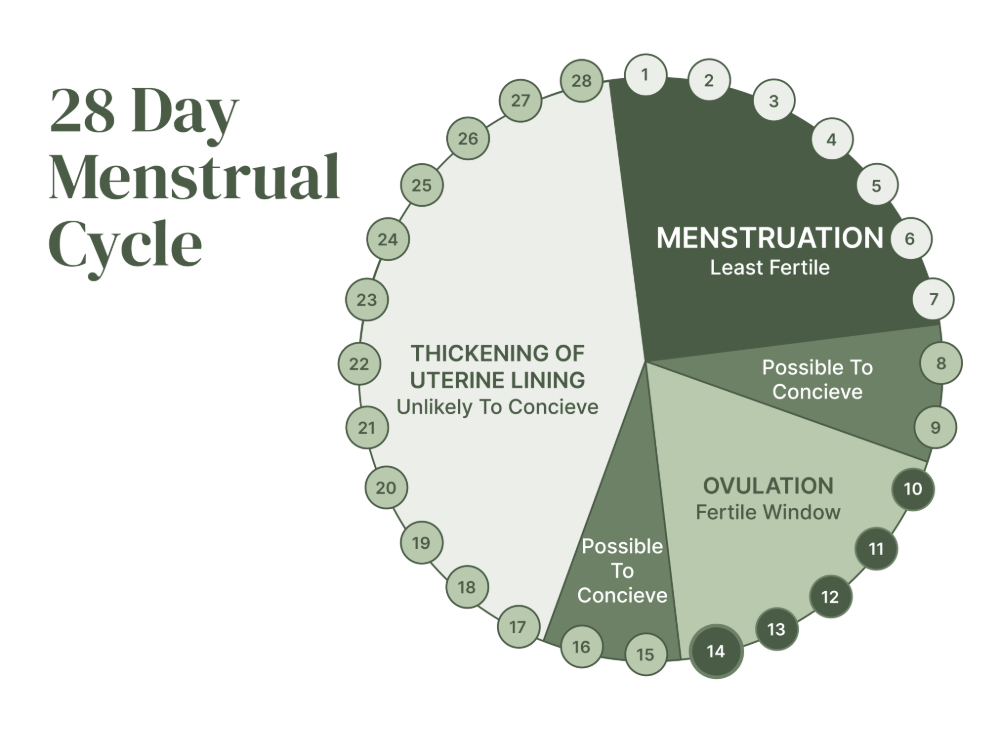
The fertile window typically lasts 5 to 6 days, including ovulation day and the days immediately before it.
Research shows that the probability of pregnancy is highest when intercourse occurs within 2 days before ovulation, with peak fertility occurring the day before ovulation.
Key Signs of Ovulation and Fertility
Your body sends signals when ovulation is approaching, and learning to recognize these signs of ovulation can be surprisingly empowering. That said, not every woman experiences every sign—and that’s okay. Everyone’s body is unique.
Changes in Cervical Mucus
As ovulation approaches, your cervical mucus changes to a clear, stretchy, and slippery texture, similar to raw egg white. This consistency helps sperm travel through your cervix and into your uterus.
The amount of mucus typically increases over 5 to 6 days before ovulation, peaking 2 to 3 days prior.
Mild Pelvic or Lower Abdominal Pain
Some women experience mild cramping or discomfort during ovulation. This pain is usually brief and occurs on one side of the abdomen, corresponding to the ovary releasing an egg.
Not all women experience this, and that doesn’t mean anything is wrong. It’s just one more sign that some bodies give and others don’t.
Increased Libido
Hormones are powerful. As estrogen levels rise around ovulation, many women notice an increase in sexual desire. This is actually your body’s natural way of encouraging intimacy during your most fertile time. Again, this shift doesn’t happen for everyone, and that’s perfectly normal.
Breast Tenderness or Sensitivity
Hormonal shifts may cause breast tenderness around ovulation. This symptom may continue into the post-ovulation phase as progesterone levels rise. Breast changes, including tenderness and fluid retention, are a normal part of the menstrual cycle.
Changes in Basal Body Temperature
Basal body temperature (BBT) is your resting body temperature, which slightly rises after ovulation due to increased progesterone.
Tracking it daily with a basal thermometer can help confirm ovulation patterns, but since the rise occurs post-ovulation, it’s more effective for understanding past cycles than predicting future ovulation.
What Can Shift Your Ovulation Timing?
Life happens, and it can affect your cycle. Stress, illness, travel, or major life changes can all shift when ovulation occurs. It’s not anything you did wrong—it’s just how your body responds to what’s happening around you.
Certain medical conditions can also affect ovulation and fertility timing, such as:
- PCOS (polycystic ovary syndrome)
- Thyroid disorders
- Obesity
- Elevated prolactin levels
When to Talk to a Women’s Health Specialist
Seeking guidance on fertility is important, especially if your cycles are irregular, you’re unsure about ovulation, or you’ve been trying to conceive without success.
A specialist can help identify underlying issues and create a personalized plan. It’s crucial to reach out if you’re over 35 or have medical conditions affecting fertility, as early evaluation often leads to better outcomes.
Schedule a Women’s Health Consultation
Understanding your female fertility window and recognizing ovulation symptoms are important parts of taking charge of your reproductive health.
No matter what stage you’re in, learning to track your cycle and recognize your body’s signs is genuinely powerful.
With multiple locations and same-week appointments, WomanCare gives you access to fertility and gynecology specialists when you need them. Request a Consultation with one of our women’s health specialists today.