
Menopause is a natural transition marking the end of your monthly menstrual cycle. Every woman’s experience is unique, and the timing and symptoms can vary widely.
Understanding what lies ahead can help you feel more prepared, both physically and emotionally, as you move into this next chapter.
Having a trusted healthcare provider, such as an OB/GYN makes a big difference during this time. A strong relationship with your gynecologist offers guidance, reassurance, and personalized care when you need it most.
At WomanCare, we’re here to listen, answer your questions, and support you throughout your transition, helping you feel informed, confident, and cared for along the way.
At What Age Do Women Typically Go Through Menopause?
The age at which menopause occurs varies, and no two journeys are exactly alike. For some women, the timeline for menopause may be genetic, mimicking their mother’s experience. For others, certain health conditions and lifestyle factors play a role. Most women experience menopause between the ages of 45 and 55, with the average age being 51.
The Menopause Timeline Explained
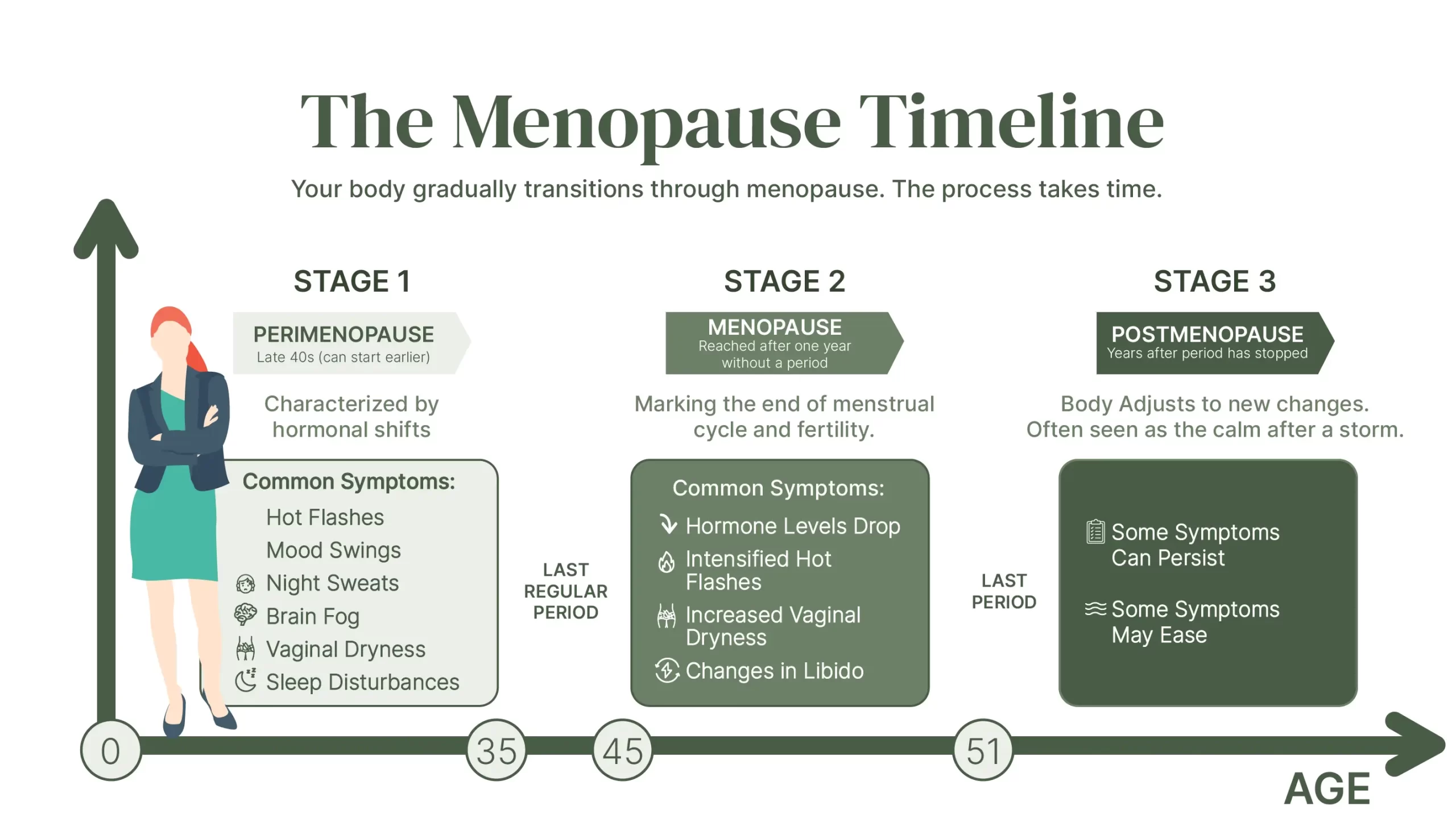
Your body gradually transitions through menopause. The process takes time.
Menopause happens in three stages, each with its own symptoms and changes.
- Perimenopause: Perimenopause typically begins in your late 40s but can start earlier. It’s characterized by hormonal shifts that lead to common symptoms like hot flashes, mood swings, night sweats, brain fog, vaginal dryness, and sleep disturbances.
- Menopause: You’ve reached menopause after a year without a period, marking the end of your menstrual cycle and fertility. Hormone levels drop, leading to more noticeable symptoms like intensified hot flashes, increased vaginal dryness, and changes in libido.
- Postmenopause: The years after your period has stopped, when your body adjusts to new changes, often seen as the calm after a storm. While some uncomfortable symptoms may ease, others can persist.
Staying connected with your doctor can help you understand and manage your symptoms. Together, you can create a plan that supports your health and wellness through this stage of your life.
Common Symptoms Throughout the Menopause Timeline
As your hormones shift during perimenopause, menopause, and postmenopause, you may notice changes in how you feel. Some symptoms come and go, while others may last longer.
Common symptoms include:
- Hot flashes
- Night sweats
- Vaginal dryness
- Pain or discomfort during intercourse
- Mood swings
- Irritability
- Sleep disturbances
- Brain fog or trouble concentrating
- Changes in libido
- Irregular or missed periods
If your symptoms are affecting your comfort or quality of life, our team is here to help you explore safe, personalized treatment options.
Factors That Affect the Menopause Stages
Every woman’s menopause journey is deeply personal. While genetics often play a leading role, there are other important factors that can shape both the timing and intensity of symptoms.
Your overall health and lifestyle can influence what this transition looks like for you, including:
- Nutrition and eating habits
- Exercise routine and activity level
- Stress levels
- Weight changes
- Smoking history
- Reproductive history
These factors don’t determine your experience entirely, but they can affect how your body responds to hormonal changes.
Schedule a Women’s Health Consultation
As your body goes through this natural biological change, feeling overwhelmed is expected and completely normal. But knowing what comes with each stage of menopause helps you feel more confident as these changes unfold.
At WomanCare, we’re committed to supporting your personal health journey, including your transition through menopause. If you’re experiencing changes or have questions about menopause, please reach out to WomanCare and schedule a women’s health consultation.